
The Genetic Whisper
Rest, Risk and the Life Between

It's nearly twenty years since my mum died, and once again I find myself asking what a life is for.
This time of year always brings her closer. Not just in memory, but in the questions I find myself returning to.
Questions about time and what matters. About whether all the striving and enduring we do is really worth the cost.
My mum died of cancer in her fifties and losing her broke my heart.
She never got to meet my youngest son.
Even now, years later, I find myself imagining the small things she would have noticed. The way she would have spoken to him. The love she would have wrapped around him without even thinking about it.
I grieve for that sometimes. For the relationship they never had and the warm, gentle presence he never got to know.
That absence still echoes.
After her death, and other losses within our family, questions began to surface about whether something genetic might be at play.
Eventually, those questions led to answers and I found out I carried a BRCA1 gene mutation in 2015.
My mum never knew she carried it. But she must have.
The knowledge arrived a generation too late for her.
The answer she never received is now mine to live with.
There is something deeply sad about that.
For a long time, I wasn't sure whether I was grateful to know.
Knowledge brings choices, but it also brings fear. It asks you to make decisions you never imagined having to make. To weigh risks against consequences. To think about your future in ways most people don't have to.
Years ago, I chose to have my ovaries removed. The surgery triggered menopause overnight and brought with it a host of physical and emotional changes.
More recently, I began thinking about the preventative mastectomy journey.
None of these decisions felt straightforward. None of them felt brave. They simply felt necessary.
Even now, when fear flickers at the edges, I find myself returning to a line from Decoding Annie Parker, a film that has stayed with me for years:
"It may not seem like faith, but it is. And maybe those who say faith sustains us are right - and maybe it doesn't matter what we have faith in. As long as it's faith in something... like the future."
That line reached something in me long before I fully understood why.
Because none of these decisions are really about certainty. They're about believing there is a future worth caring for, even when there are no guarantees.
And yet, despite knowing I carried this risk, despite all the appointments and surgeries and conversations, I still ignored a rash on my skin for over two months.
I convinced myself it was nothing.
I applied Sudocrem and carried on.
Eventually, it turned out to be skin cancer.
Looking back, I've often wondered why.
How could someone who knew they were high-risk fail to pay attention to something so obvious?
The truth is that awareness and capacity are not the same thing.
At the time, my body was already carrying more than it could comfortably hold. Stress, grief, illness, responsibilities, fear. The same pressures that were wearing me down physically were also making it harder to listen.
I wasn't ignoring the warning signs because I didn't care.
I was ignoring them because I was too busy and overwhelmed with everything else.
And that's the thought I keep returning to.
Not the genetics themselves, but the habit of carrying on.
The belief that we should keep pushing. Keep coping. Keep producing and keep proving ourselves.
For years, I did what many of us do. I kept going. I kept enduring. If something was difficult, I pushed through it. If I was exhausted, I carried on. If life became overwhelming, I convinced myself I would rest later.
But as I think about my mum, and about my own health, I find myself wondering something different:
What if the life we're striving for comes at the expense of the life we're trying to preserve?
Losing my mum in my twenties taught me something I still haven't fully learned: life is not always as long as we assume it will be.
Yet even now, I find myself caught between two competing instincts.
One tells me to strive. To achieve. To be productive. To gather qualifications, titles, accomplishments and evidence that my life has been worthwhile.
The other simply wants to live.
And perhaps most difficult of all, to accept that this life might never look particularly impressive from the outside.
That I may never be described as successful, ambitious, or someone with a title or status to be proud of at the end of my life
Some days, I still struggle with that.
Not because those things matter most to me, but because they are often the things the world notices.
But perhaps that's part of what illness has forced me to confront too.
The uncomfortable possibility that a meaningful life and an impressive life are not always the same thing.
I still feel the pull of achievement. I still wrestle with the loss of my career and the identity that came with it. There are days when I worry that I am no longer contributing enough, producing enough, or doing enough to justify my place in the world.
But when I strip everything back, I'm not sure those are the things that matter most.
Not when life can change so quickly.
Not when I've seen firsthand how fragile our plans can be.
Over the years, I've also come to understand something else.
I can't change the genes I inherited, but I can pay attention to the life that surrounds them.
There's a phrase often used in health research: ‘genes load the gun, but environment pulls the trigger’.
I found that both unsettling and hopeful.
Not because it suggests we can control everything, but because it reminds us that our bodies do not exist in isolation from the lives we live.
The overwhelm. The depletion. The constant habit of carrying on.
Those things matter too.
Losing my mum changed the way I think about time.
BRCA may be part of my inheritance. So is grief. But so too is perspective.
My mum never got the chance to slow down one day. To finally enjoy life later.
None of us know how much time we're given.
What I do know is that I want to spend less of mine simply enduring.
I want to stop treating life as something that starts later.
I want to write the things I want to write.
I want to spend time with the people I love.
I want to spend time in nature.
I want a life that feels lived, not just managed.
Maybe that's what all of this has been teaching me.
The surgeries matter. The screening matters. The medical decisions matter.
They are acts of care for my future self.
But if I'm willing to go through all of that to protect my future, yet continue living in a way that exhausts and depletes me, then perhaps I'm missing part of the lesson.
Risk reduction isn't only about the decisions made in hospital rooms.
It's also about the life that surrounds them.
The stress. The pace. The pressure. The constant habit of overriding what my body is trying to tell me.
The more urgent life feels, the more tempted we are to postpone rest. Yet urgency may be the very reason we need it most.
Perhaps the real challenge isn't simply protecting my future.
It's learning to value it enough to live differently in the present.
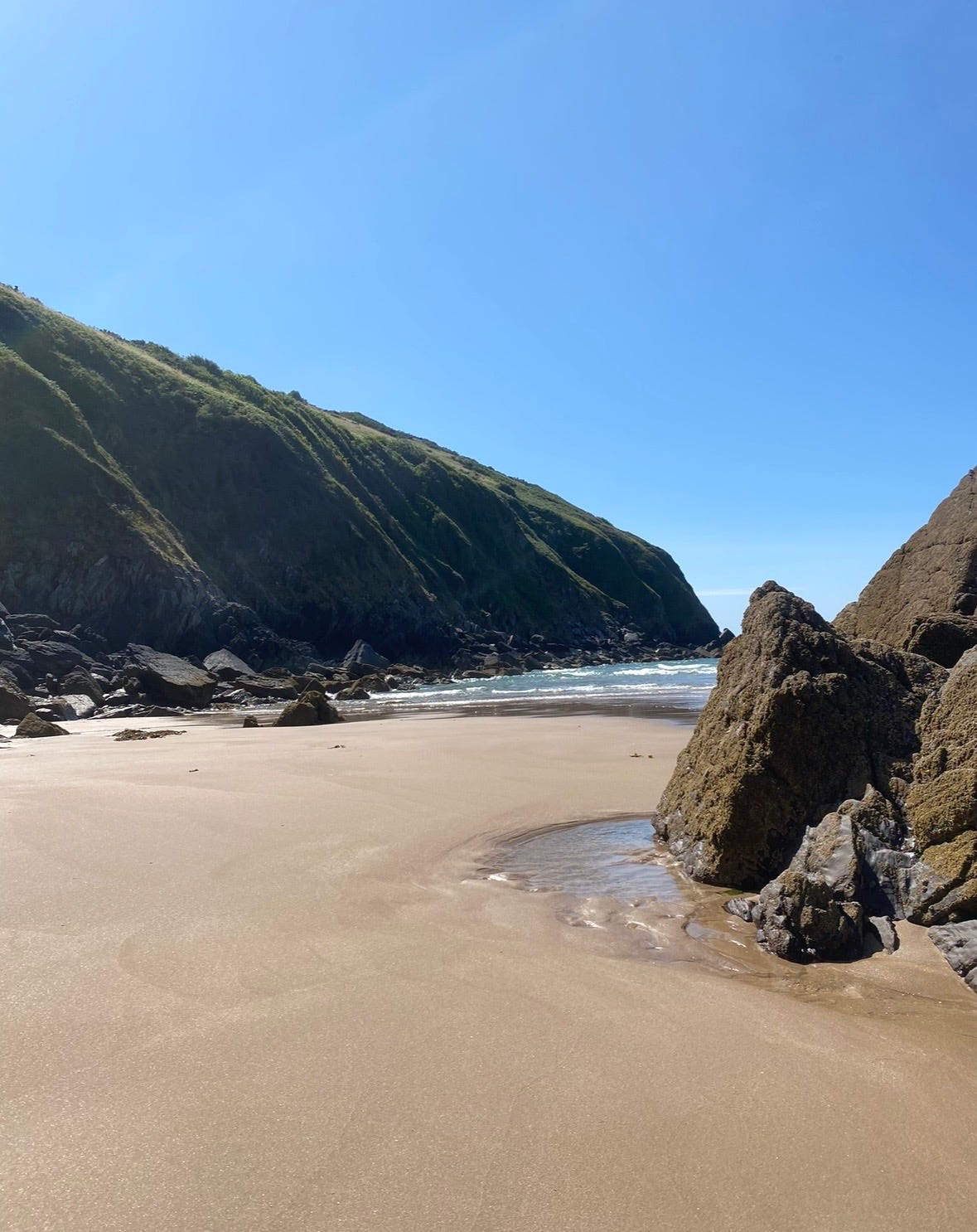
Beautiful article and picture, I am sure you mum would be proud of you.
What a beautiful and thought provoking piece. Thank you as I process my own grief, this is helpful 💕