
Why Rest Feels Wild
The philosophy behind Wild Rest.

A few people have asked me why I called this space Wild Rest.
When I first chose the name, I thought the answer was quite straightforward. I wanted somewhere to write about nature, slower living, illness and the changing seasons of life. It seemed to hold all of those things together.
Over time, though, I've realised the name has changed alongside me. I used to think wild described the landscape, but now I think it symbolises something more as well.
People sometimes tell me they love how wonderfully wild my garden looks, and the truth is, some of that wildness was chosen, and some of it wasn't.
There are days when I simply don't have the capacity to keep every border neat or every weed under control. For a long time, I apologised for that, seeing the untidy corners as evidence that I wasn't looking after it properly.
Then, slowly, something shifted. I stopped asking why the garden couldn't look perfect and started noticing what was already there:
The poppies that had quietly scattered themselves.
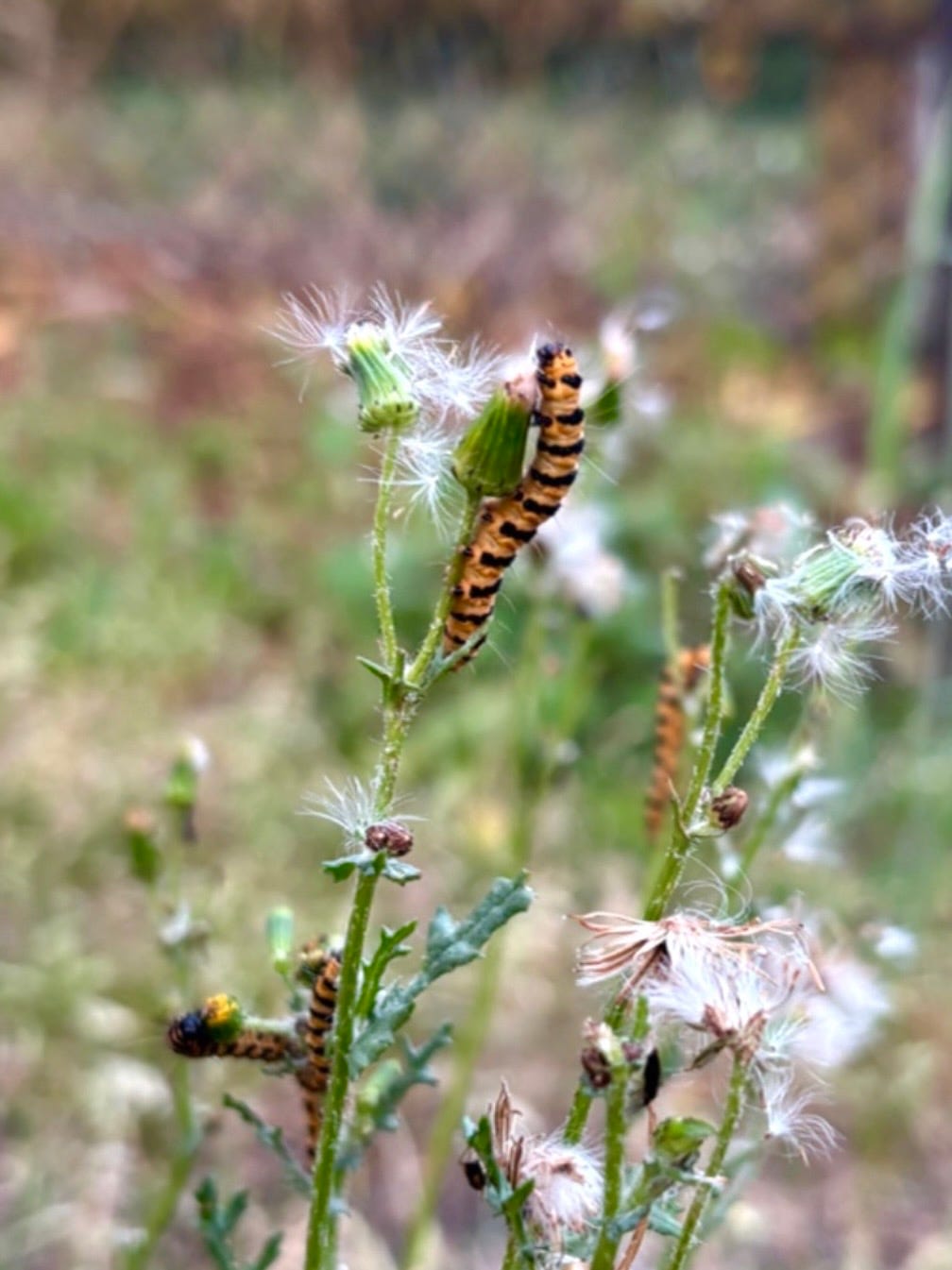
The cinnabar moth caterpillars that loved the weeds.
The bees that seemed completely unconcerned by the unruly borders.
The way nature never appears to apologise for growing at its own pace.
Somehow I'd learned to admire wildness in nature while expecting perfection from myself.
For years, I measured myself in ways that felt perfectly ordinary: by how much I could do, how useful I was, and how much I could carry before asking for help.
Rest always seemed to require a reason. It wasn't enough simply to be tired - it needed to be earned.
The more I've reflected on it, the more I've wondered whether I'm not alone in that.
Without really noticing, many of us have started treating rest as though it needs justifying, as though our worth depends on first proving we've done enough to deserve it.
It wasn't until I became unwell that I began to question that way of thinking more deeply.
Illness has a way of exposing beliefs you never realised you were living by.
It has also asked me different questions, and I now find myself thinking less about how much I can achieve, and more about what I can sustain.
I'm still discovering the answers.
Some days I still catch myself apologising for what I can't do, or feeling guilty for resting before I've reached the point of exhaustion - old habits don't disappear overnight.
But little by little, I've found myself looking at life differently.
I've come to love the wild because, sometimes, I have to.
Not because I've lowered my standards.
Not because I've given up.
But because life has taught me that beauty and care aren't the same as perfection.
A garden can be deeply loved without being immaculate.
Perhaps we can too.
That's why Wild Rest wasn't born out of a lifestyle choice.
It grew out of survival.
Wild Rest reminds me, as much as anyone else, that rest doesn't have to be earned, and that perhaps the wildest thing we can do in a culture defined by productivity is to believe our value was never dependent on it in the first place.
When I look around my garden now, I don't see a list of jobs left undone; I see a place that's been tended with love, within the limits of the person tending it.
I think that's what Wild Rest has become: not simply a place to write about nature, illness or slower living, but a place to question the stories we've inherited and to remember that a meaningful life doesn't have to look perfectly cultivated to be deeply cared for.
This really resonated with me. I wonder if the deeper question isn't whether rest has to be earned, but why so many of us came to believe our worth depended on productivity in the first place. Illness has a way of exposing those inherited stories—and inviting us to write new ones.
This is beautiful. Wild isn't unruly or unkempt. It's organic and free and blissfully imperfect. Here's to not equating worth with perfection or productivity. And to being more like our gardens.